Sale Price:
$15.00
Original Price:
$20.00
Developmental Progression Framework & Checklist
Small steps. Meaningful progress.
Some students make meaningful motor gains that traditional developmental checklists may overlook. Created by a school-based OT and PT, this practical resource breaks six school-related motor skills into smaller, achievable steps—helping teams recognize current abilities, plan intervention, and document growth toward functional school participation.
Six Featured Skill Areas
Gross Motor
Seated Positioning: Maintaining seated positions during academic tasks.
Single-Leg Balance: Supporting access to steps, playground equipment, and dressing for toileting.
Mobilizing: Walking, propelling, running, rolling, or crawling to navigate school environments and keep up with peers.
Fine Motor
Grasp & Tool Use: Grasping and manipulating classroom tools and materials.
Pre-Writing & Handwriting: Building skills for classroom assignments and written communication.
Scissor Skills: Developing the grasp and control needed for classroom cutting activities.
What’s Included
Developmental Progression Framework: Each skill area includes Levels 1A/1B, 2A/2B, and 3A/3B, with suggested IEP goals, treatment ideas, and classroom carryover suggestions. Bonus level-specific guidance highlights strategies and priorities for students at different ability levels.
Developmental Checklist: A companion tool covering the same six skill areas across four ability levels, with treatment activities to support intervention planning.
Use These Resources To:
Identify a student’s current skills and next achievable steps.
Recognize and document small, meaningful gains.
Connect foundational motor skills to everyday school participation.
Support collaboration across therapy, classroom, and home.
Guide discussions about intervention strategies and skill priorities.
Designed for school-based OTs and PTs, with practical ideas to share with educators and families.
This resource is a guide and does not replace individualized evaluation or OT/PT clinical judgment. Suggested goals and activities should be adapted to each student’s abilities, educational needs, and IEP team decisions.

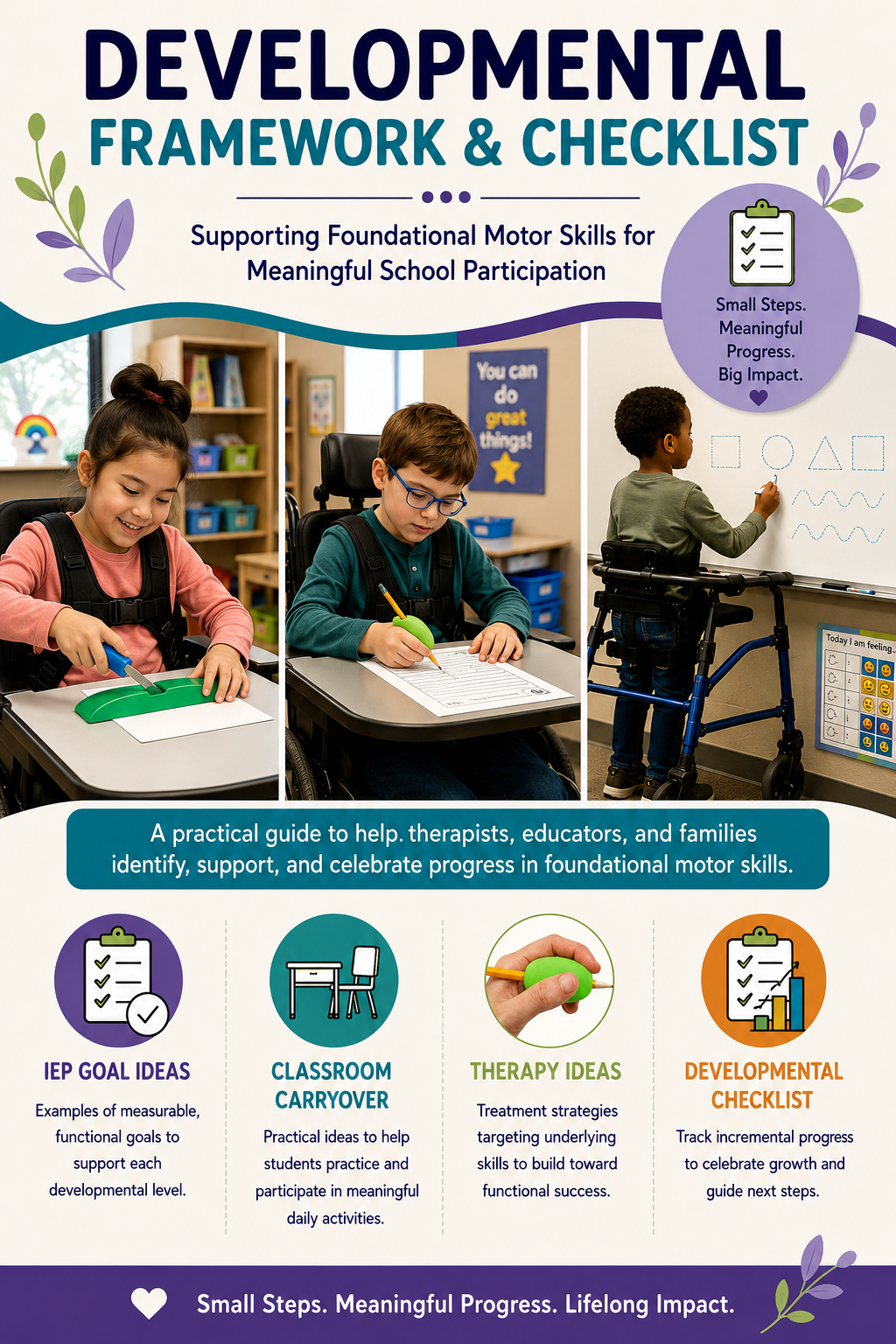 Image 1 of 8
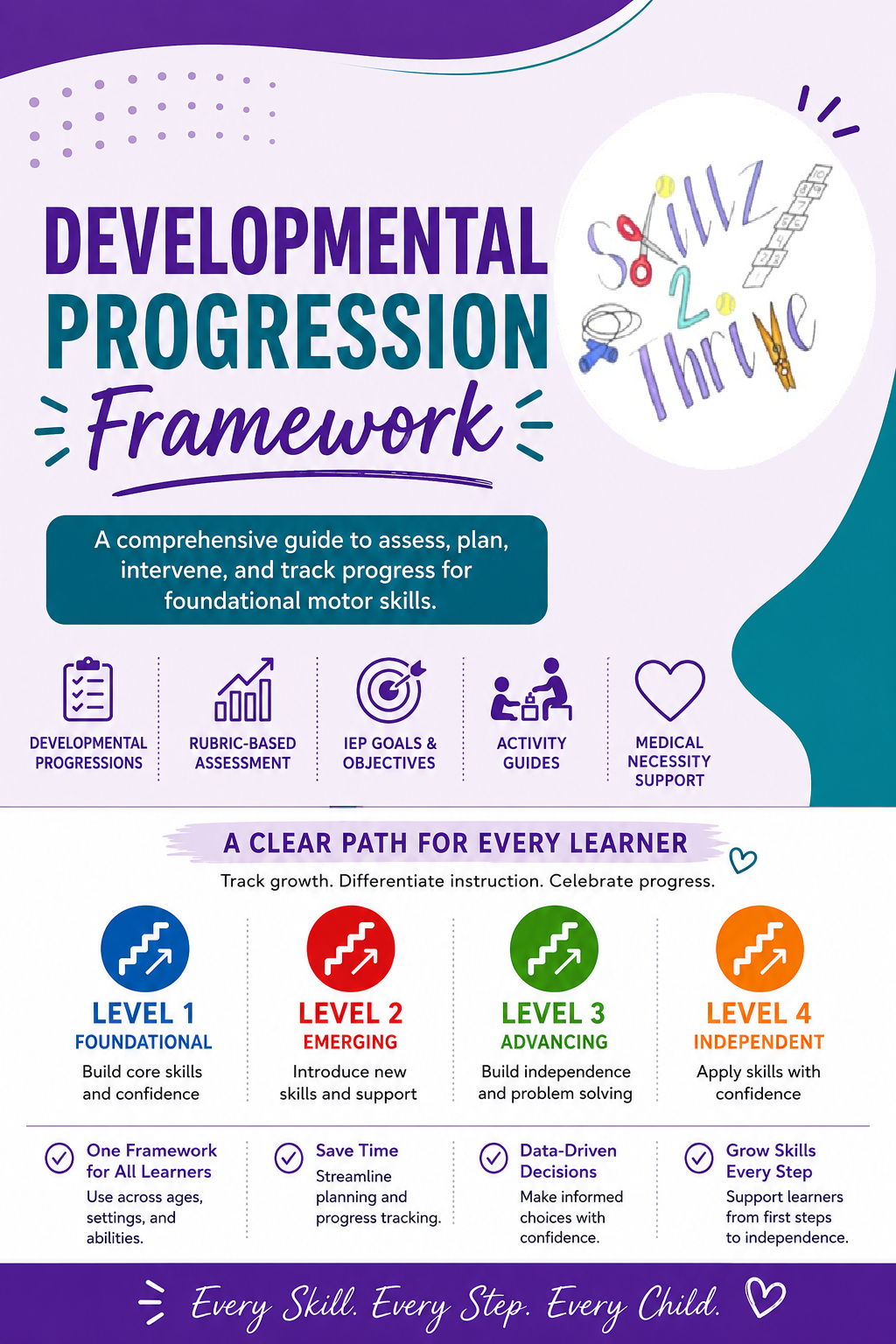 Image 2 of 8
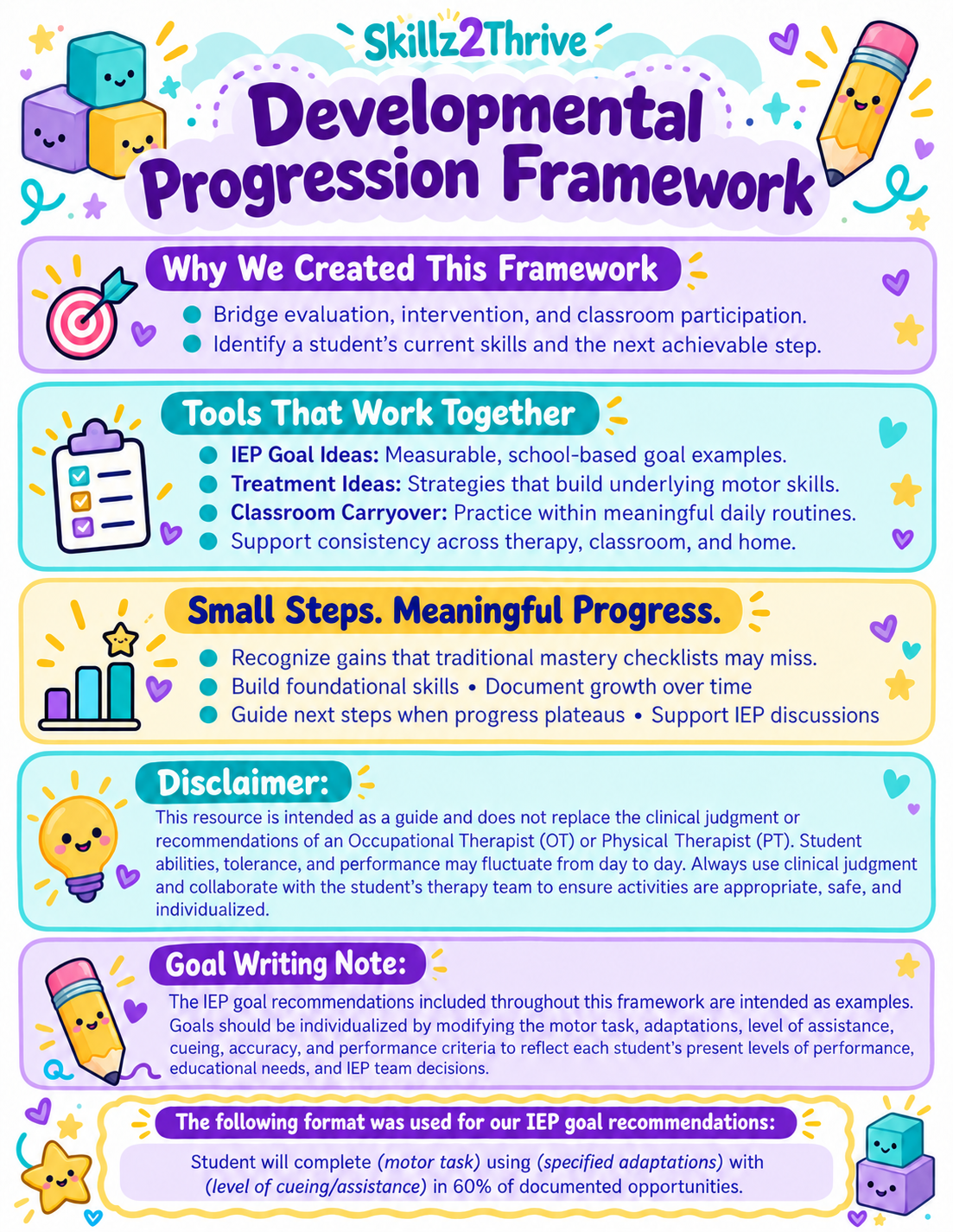 Image 3 of 8
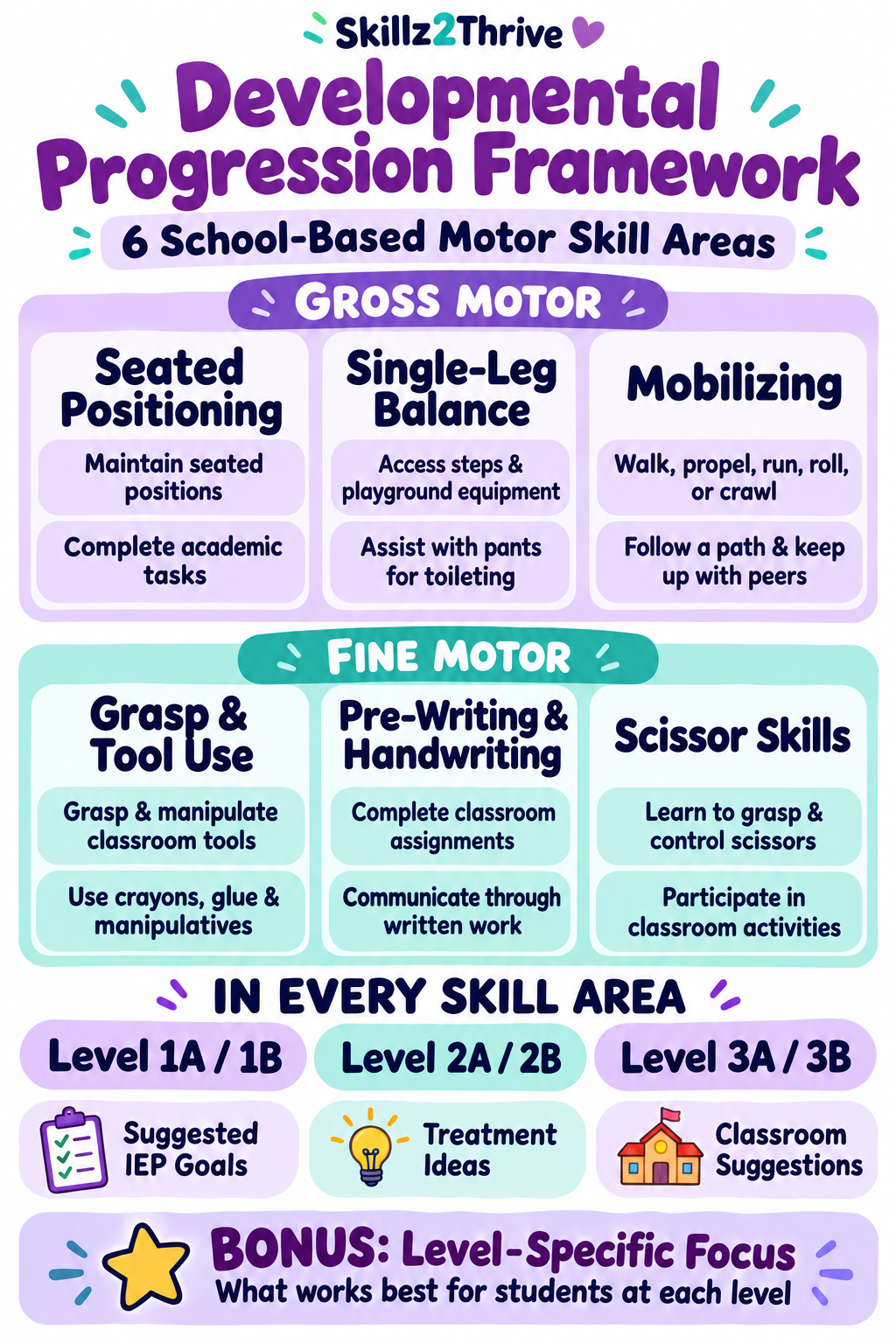 Image 4 of 8
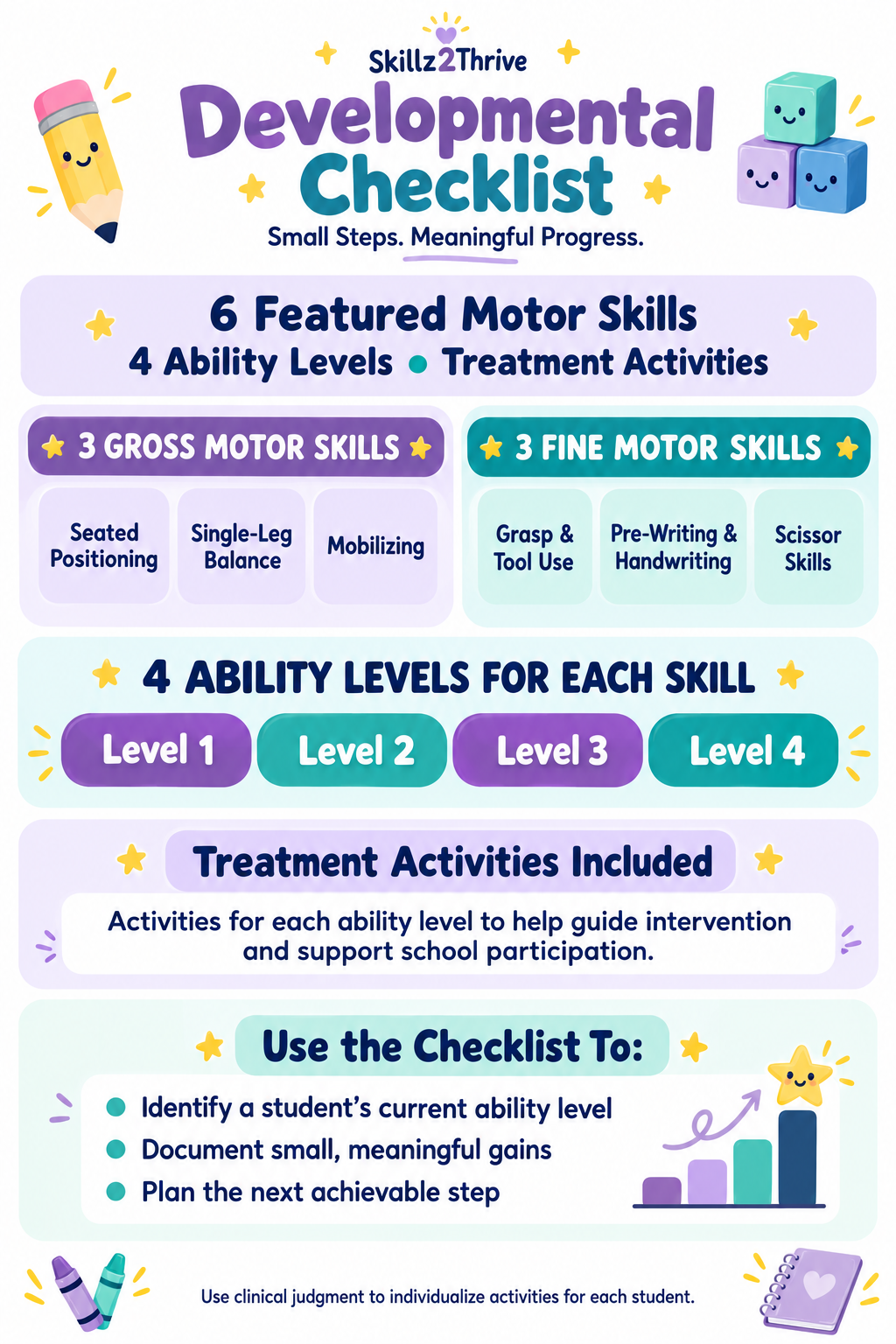 Image 5 of 8
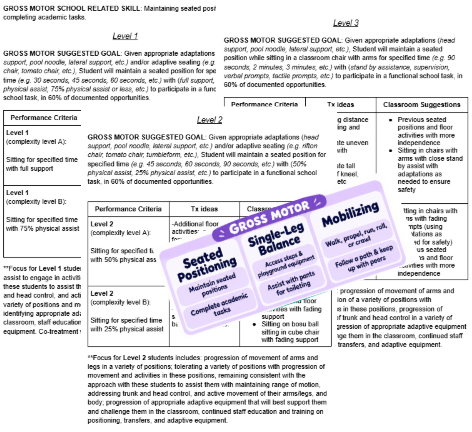 Image 6 of 8
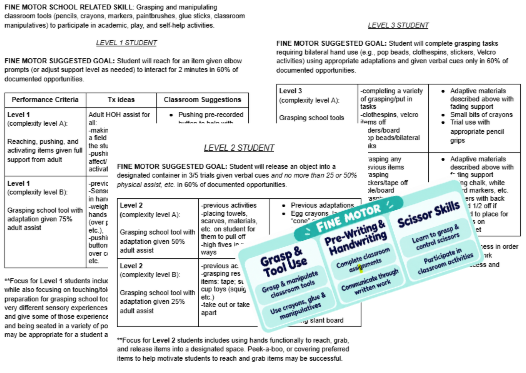 Image 7 of 8
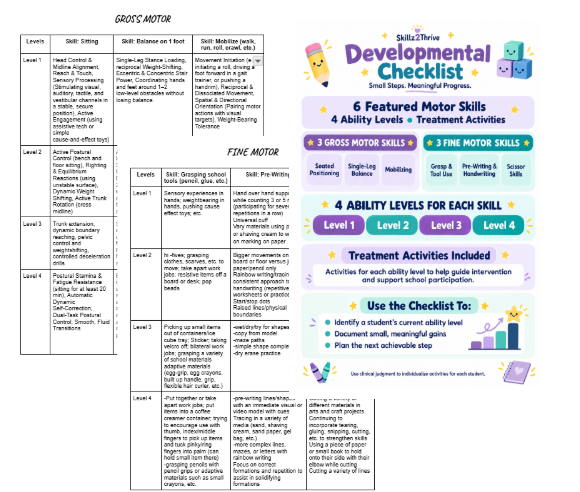 Image 8 of 8